
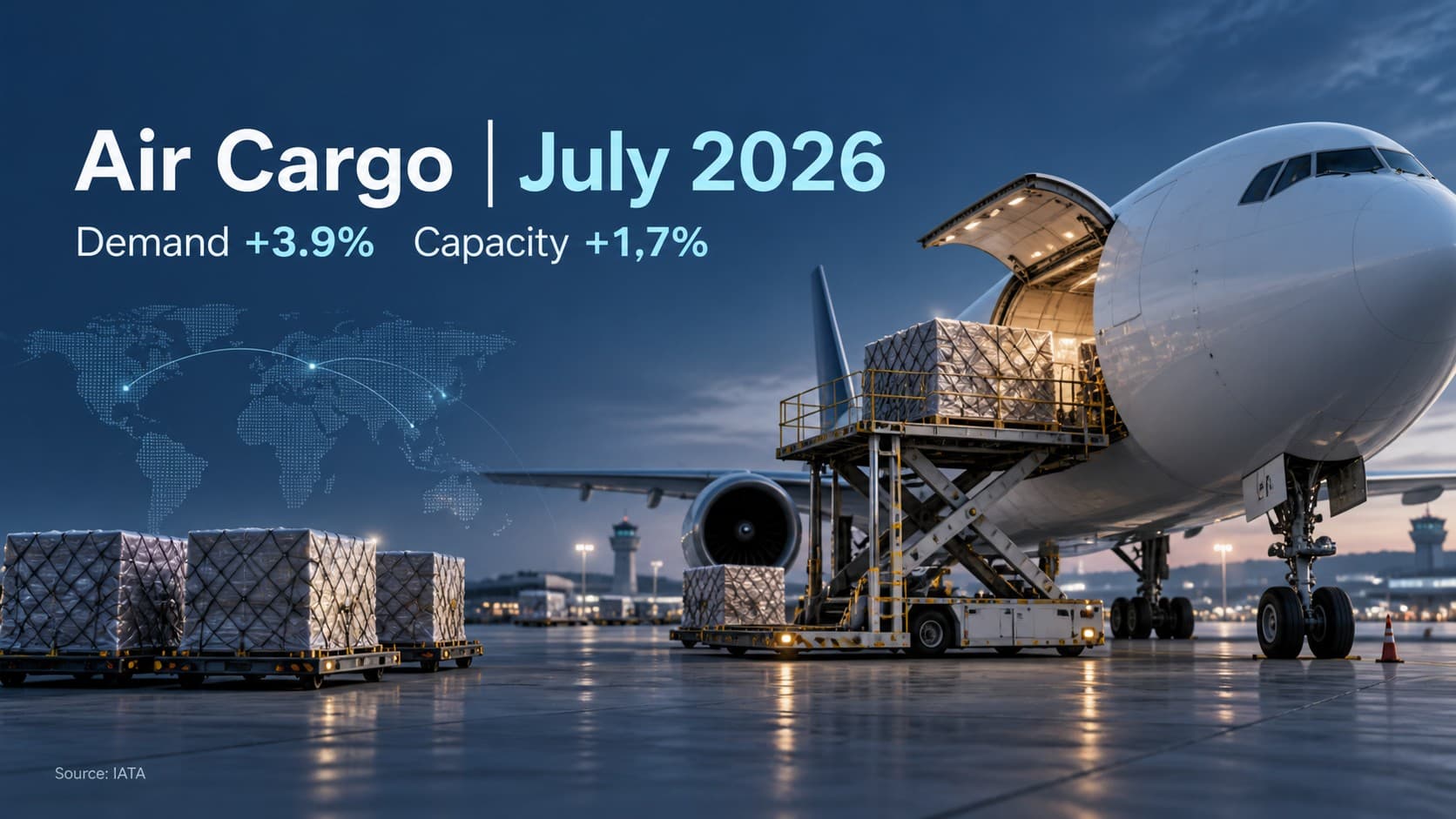
Global air cargo demand grew 3.9% year on year in July 2026, while available capacity increased 1.7%, according to IATA’s August 31 release. Demand is measured in cargo tonne-kilometers and capacity in available cargo tonne-kilometers.
The global figures conceal important differences. North American carriers recorded 4.8% demand growth while capacity fell 1.5%. Asia-Pacific demand rose 4.1% against 3.0% capacity growth, and European demand increased 4.4% against a 1.3% capacity gain. Across trade lanes, Asia–North America traffic grew 9.2%. IATA also highlighted higher fuel prices, geopolitical tensions and tariff uncertainty as factors to watch.
Meridian’s working view
For shippers, the useful question is how those conditions affect the route, shipment dimensions and departure window they actually need. A global capacity average cannot establish whether a particular flight can accept a bulky or time-critical consignment.
Planning should begin with a firm cargo-ready date and verified weight, dimensions and handling requirements. Those details help the forwarder assess aircraft suitability, transfer options and the time available for screening and documentation.
For a delivery tied to an installation or production milestone, the plan should also identify the latest acceptable arrival and a workable alternative if uplift changes. Air transport is only one part of that timeline: terminal release, customs clearance and final delivery must fit the same deadline.